
White Dragon
白ハク · haku
Nothing but a blue frame. 白 means white, and the tile is the white of the tile itself.
- Group
- Dragons 三元牌 sangenpai
- Type
- Honor · dragon
- Notation
5z- In the set
- 4
- Unicode
- U+1F006
Did you know
- Most Japanese sets leave the white dragon completely blank; a framed white like this one is more usual elsewhere.12
- It probably began as a spare. The oldest surviving sets, from around 1872, have eight blank tiles, four filed with the dots and four with the bamboo, and no way to tell them apart.34
- Its many nicknames include tofu, soap, the coffin and the billiard table. In Chinese it is 白板, the white board.42
- Some Japanese parlors use a white with a red dot, shiro pocchi, which becomes a wild tile if you draw it for an ippatsu win right after riichi.15
- Dragon dora loop white, green, red: the red dragon as the indicator makes white dora.
At the table
- Honors never make sequences. White dragon can only be used in a pair, a triplet or a kan, so a lone one is often the first tile out of a hand.
- It is dora when
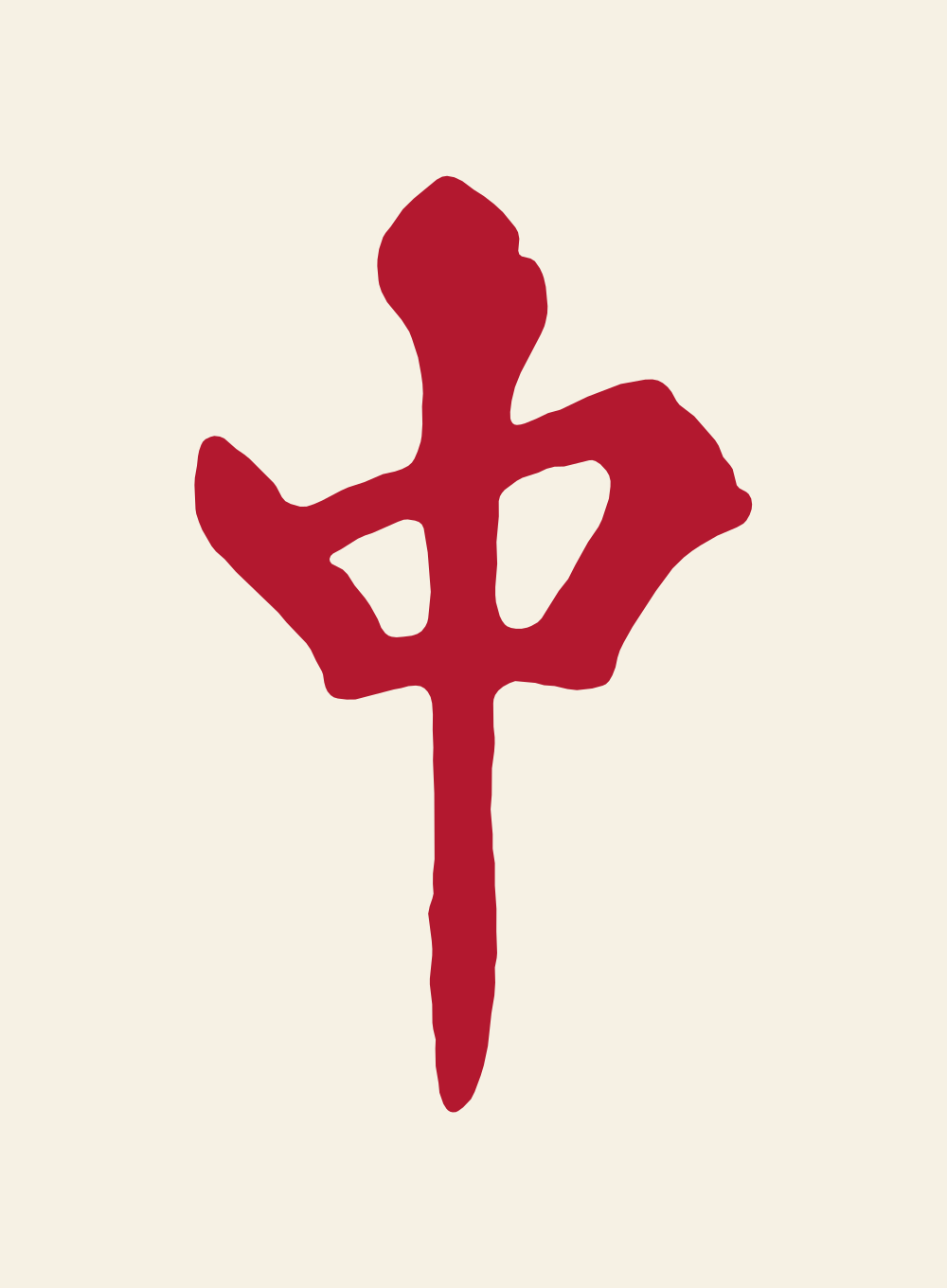 is the dora indicator. Turned up as the indicator itself, it makes
 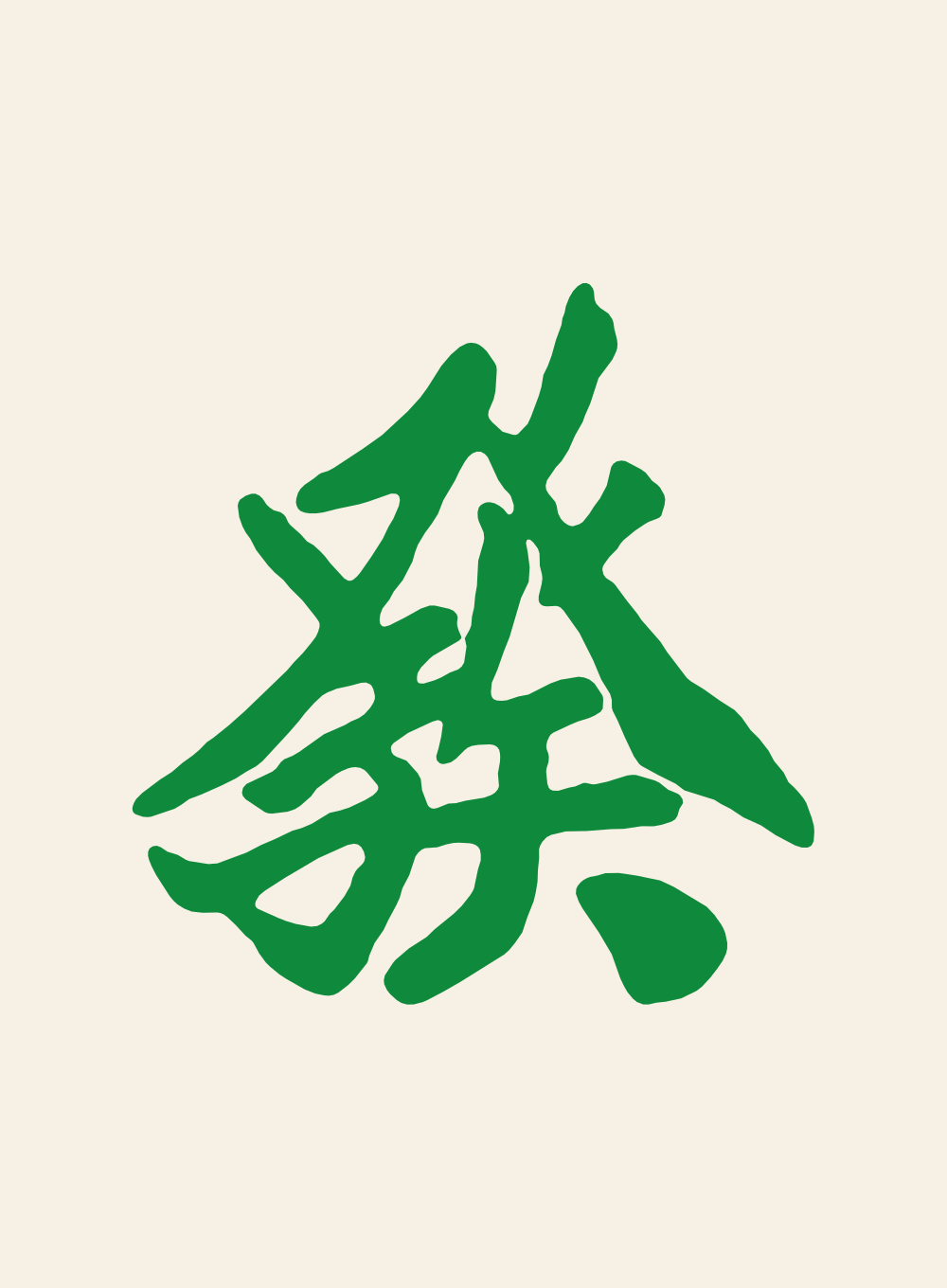 dora.
dora.
Yaku it can help
- Yakuhai a triplet is 1 han
- Shousangen two dragon triplets and a dragon pair
- Daisangen all three dragon triplets
- Honitsu one suit plus honors
- Tsuuiisou honors only
- Chanta a terminal or honor in every set
- Honroutou terminals and honors only
- Kokushi Musou one of the thirteen orphans
Where the dragons come from
The dragons came together late. The oldest surviving sets, brought from China around 1872, have 中 filed with the winds and eight blank tiles, but no 發. By around 1890, sets from Ningbo came in boxes marked 中發, the game's name at the time, which the British consular official Wilkinson, who bought them, glossed as "hit and go". Dragons is Babcock's English name from the 1920s; in Chinese they are 三元牌, the "three fundamental tiles".364
Nobody knows for sure what the three stand for. One reading is archery: 白 the white target, 發 loosing the arrow, 中 hitting it. Another sees life's three prizes: 發 wealth, 中 a marriage, 白 a spotless name. A Japanese folk reading sees a beauty: white skin, glossy black hair (in Japanese, midori no kurokami, "green-black hair"), red lips. Japanese players list them in that order, haku, hatsu, chun; Chinese says 中發白.72
They also gave Japanese mahjong a word: dora, the bonus tiles, is short for the English dragon.5
The three dragons
Sources
- 麻雀牌, Wikipedia (Japanese) Japanese
- 麻雀牌, Wikipedia (Chinese) Chinese
- 二 一九世紀の中国麻雀牌(プロト・マージャン), p. 2: グロバー牌 (the Glover sets, c. 1872), Japan Playing Card Museum (日本かるた文化館) Japanese
- Mahjong tiles, Wikipedia
- ドラ (麻雀), Wikipedia (Japanese) Japanese
- 二 一九世紀の中国麻雀牌(プロト・マージャン), p. 5: ウイルキンソン牌 (the Wilkinson set, Ningbo, c. 1890), Japan Playing Card Museum (日本かるた文化館) Japanese
- 【現代麻雀への道】41 三元牌の意味は?, Fukuchi Makoto, note Japanese
Play with it
Every tile in Mahjong Sushi is carved and lit in 3D like this one. Hover the white dragon at the table for its name and value.
Play Mahjong Sushi