Riichi Mahjong Scoring, Explained
How a winning hand turns into points: count the han, count the fu, look it up. Every table here is generated by the scoring engine that runs Mahjong Sushi, so the numbers match the game to the point.
The short version
- Check you have a yaku. No yaku, no win, however good the hand looks. See the yaku list.
- Add up han. Each yaku is worth some han. Add one han for every dora, red five and (after riichi) ura dora.
- At 5 han or more, stop. The hand is a limit hand and fu don't matter: jump to the limit table.
- Otherwise count fu and round up to the next 10. Most hands land on 30 or 40.
- Look it up in the points tables, or let the calculator do all of this from the tiles.
Han: the big multiplier
Han come from yaku and dora. A typical first win is riichi plus a dora or two: 2 or 3 han. Some yaku are worth one han less once you've called a tile (chi, pon or open kan), and some can't be open at all. The yaku list marks both.
Every han doubles the hand's value, which is why a single dora matters so much. Past 4 han the doubling is capped by the limits.
Fu: counting the small stuff
Fu (符, "minipoints") reward how the hand is built: concealed triplets, honor tiles, awkward waits. Start at 20, add what applies, and round up to the next 10.
| Source | When | Fu |
|---|---|---|
| Base (fu-tei) | Every winning hand | 20 |
| Closed ron (menzen kafu) | Winning on a discard with a closed hand | +10 |
| Tsumo | Self-draw, except pinfu tsumo | +2 |
| Wait | Kanchan (4-6 on 5), penchan (1-2 on 3) or tanki (pair wait) | +2 |
| Value pair | Pair of dragons, your seat wind or the round wind (a double-wind pair is +4) | +2 |
| Open triplet | Simples 2–8 / terminals and honors | +2 / +4 |
| Closed triplet | Simples / terminals and honors | +4 / +8 |
| Open kan | Simples / terminals and honors | +8 / +16 |
| Closed kan | Simples / terminals and honors | +16 / +32 |
| Open pinfu-shape | An open hand that would total 20 fu on ron | becomes 30 |
| Chiitoitsu | Seven pairs, always | 25 flat |
Sequences and ordinary pairs add nothing, and the wait counts only once. A triplet completed by someone's discard counts as open for fu, even in a closed hand.
Worked example
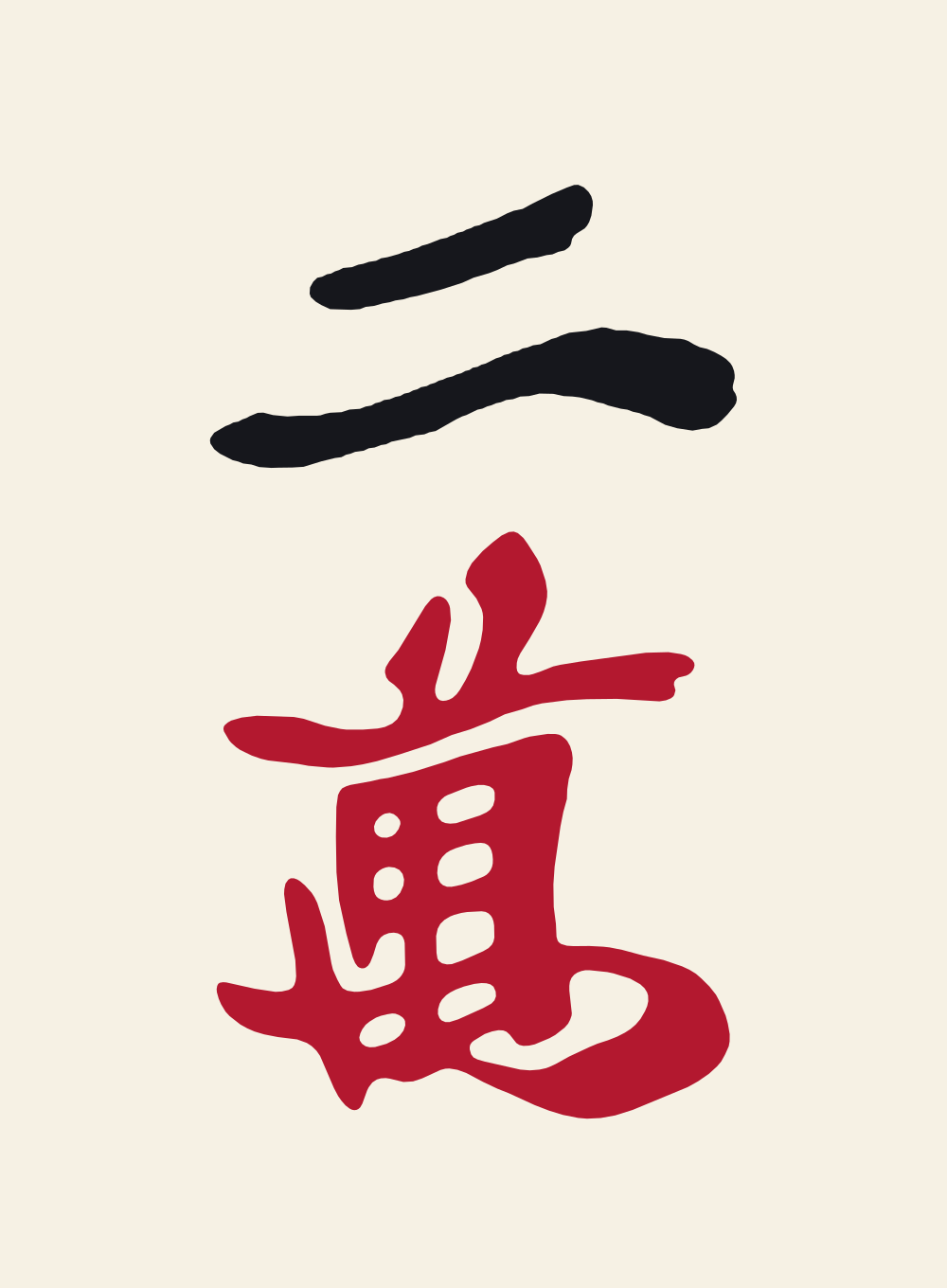
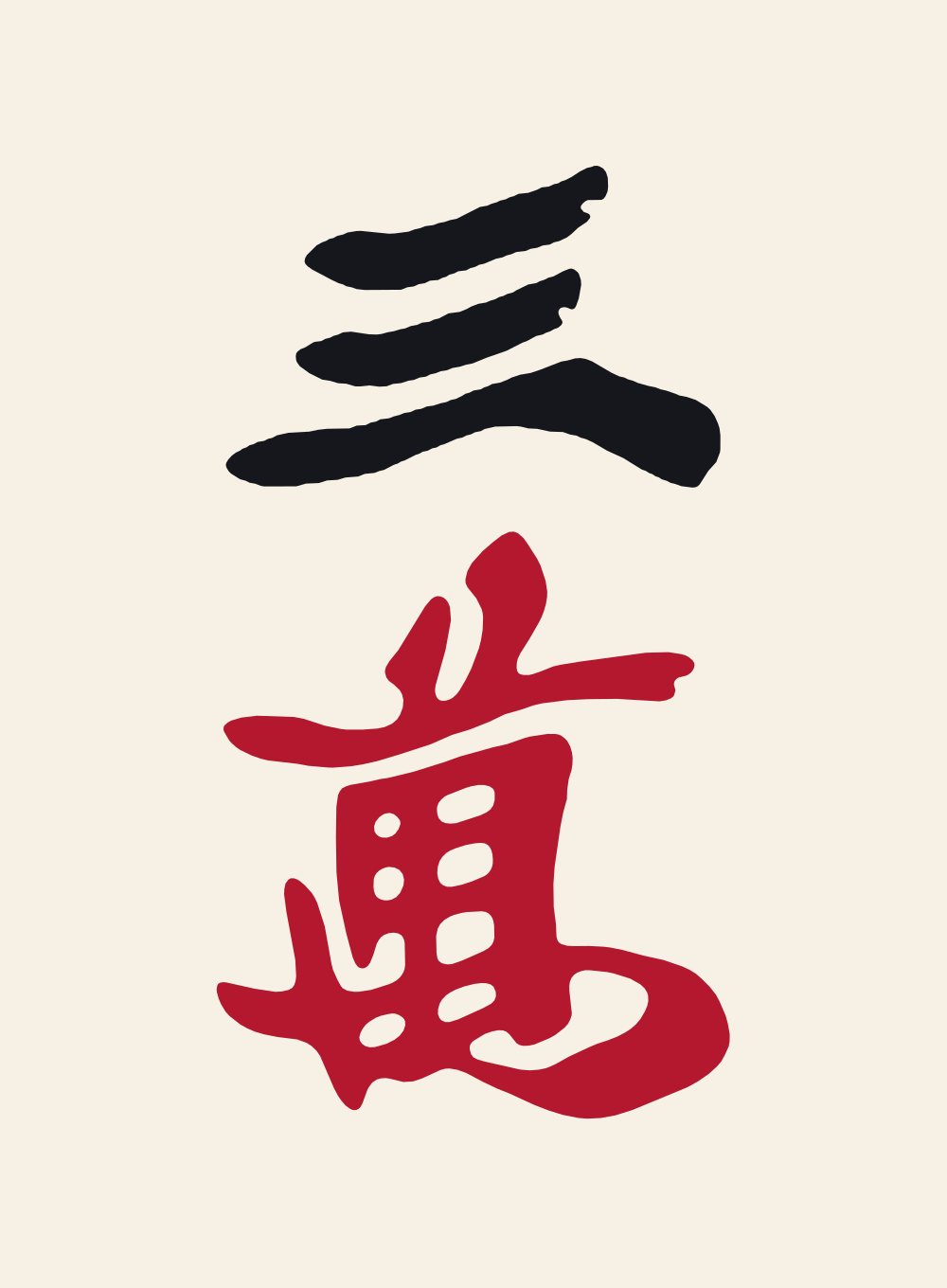
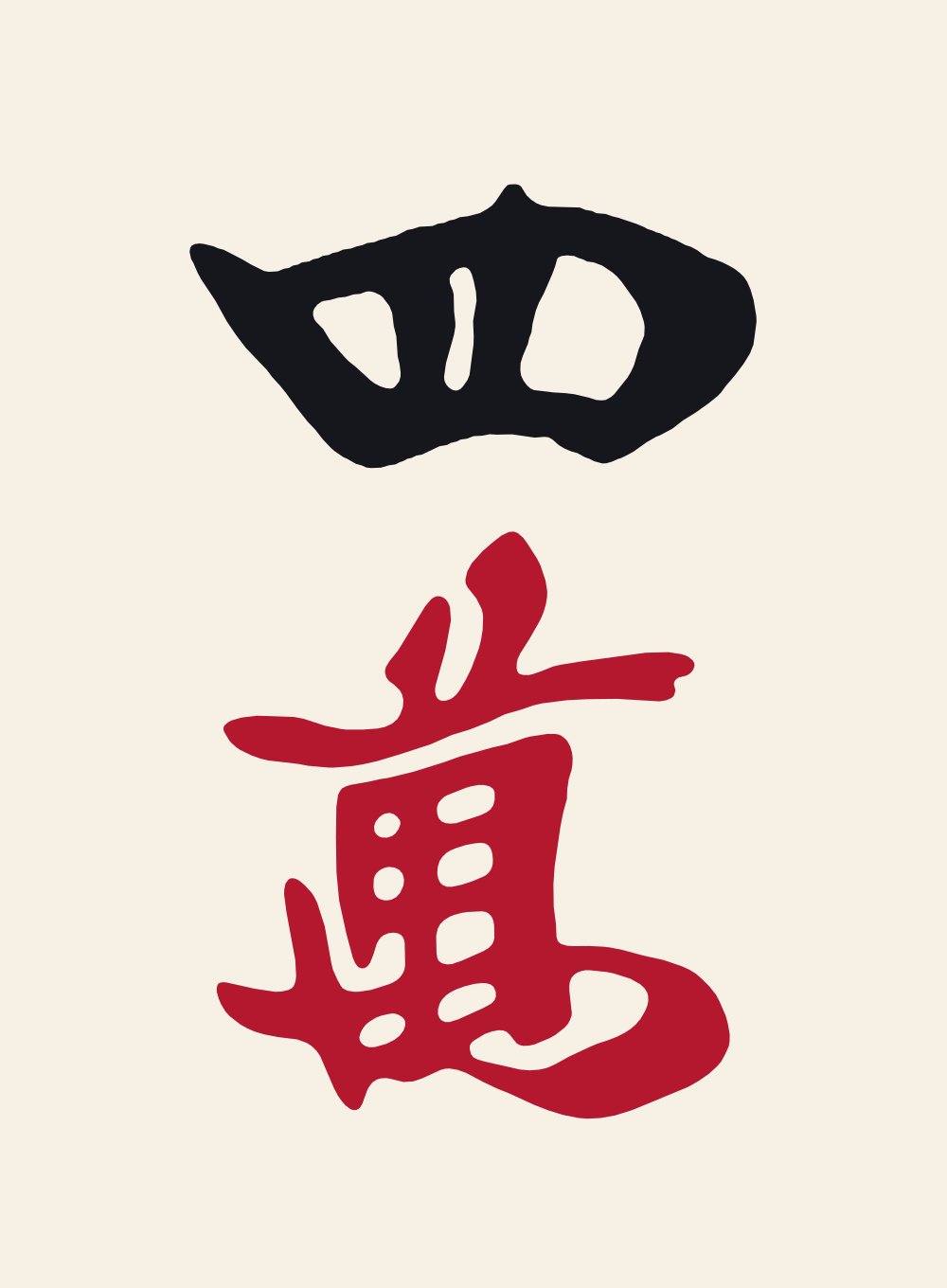
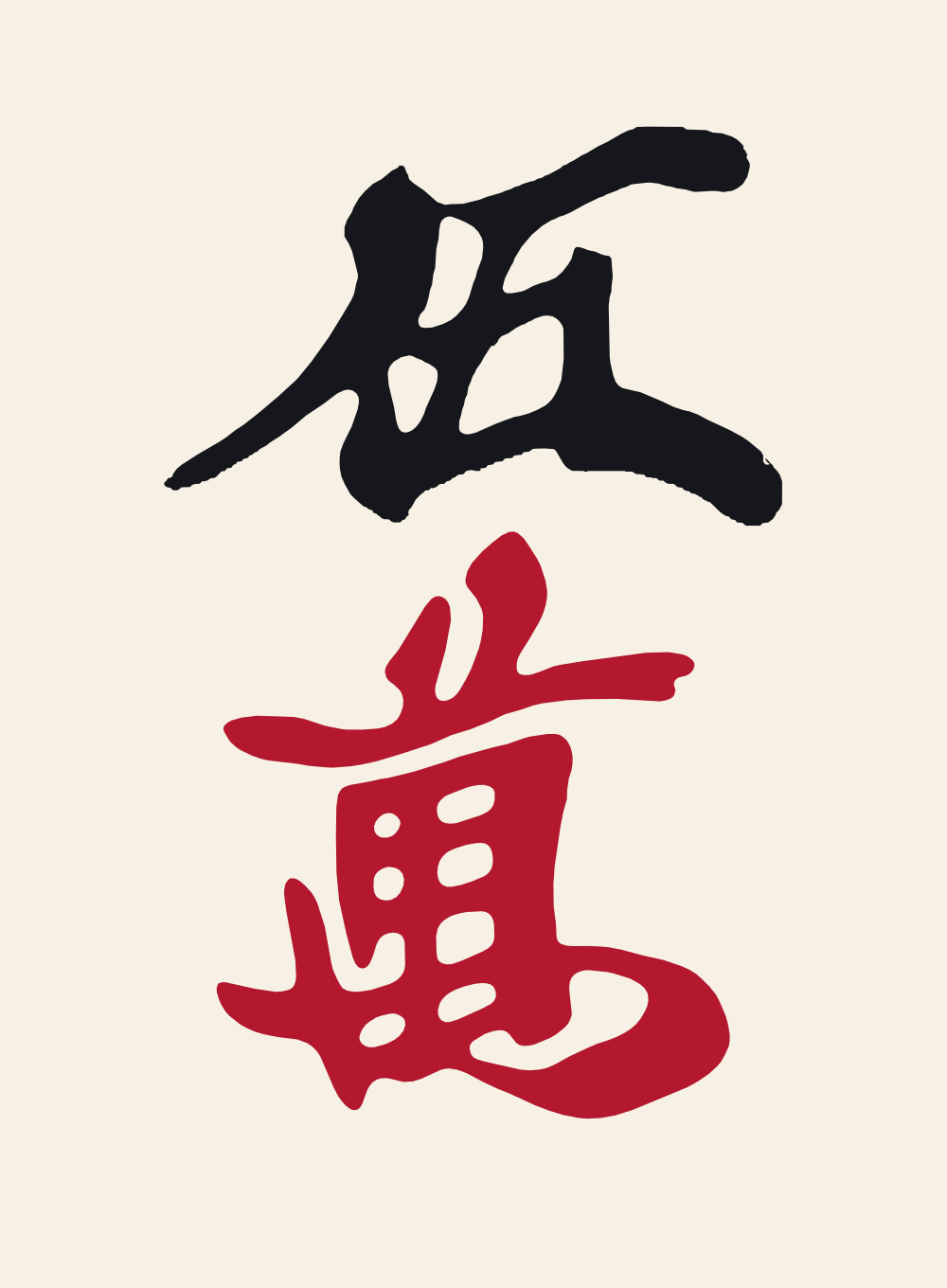
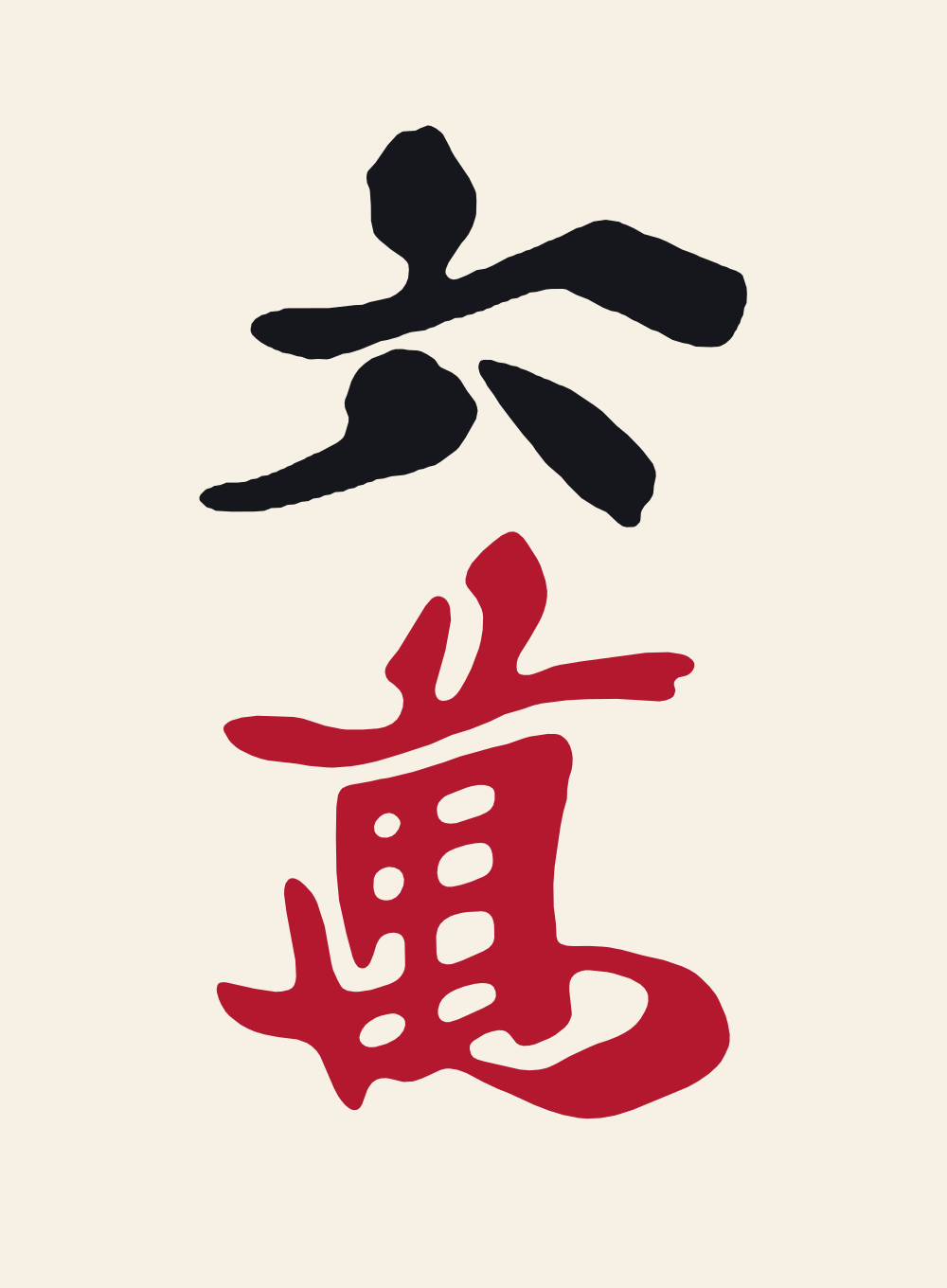
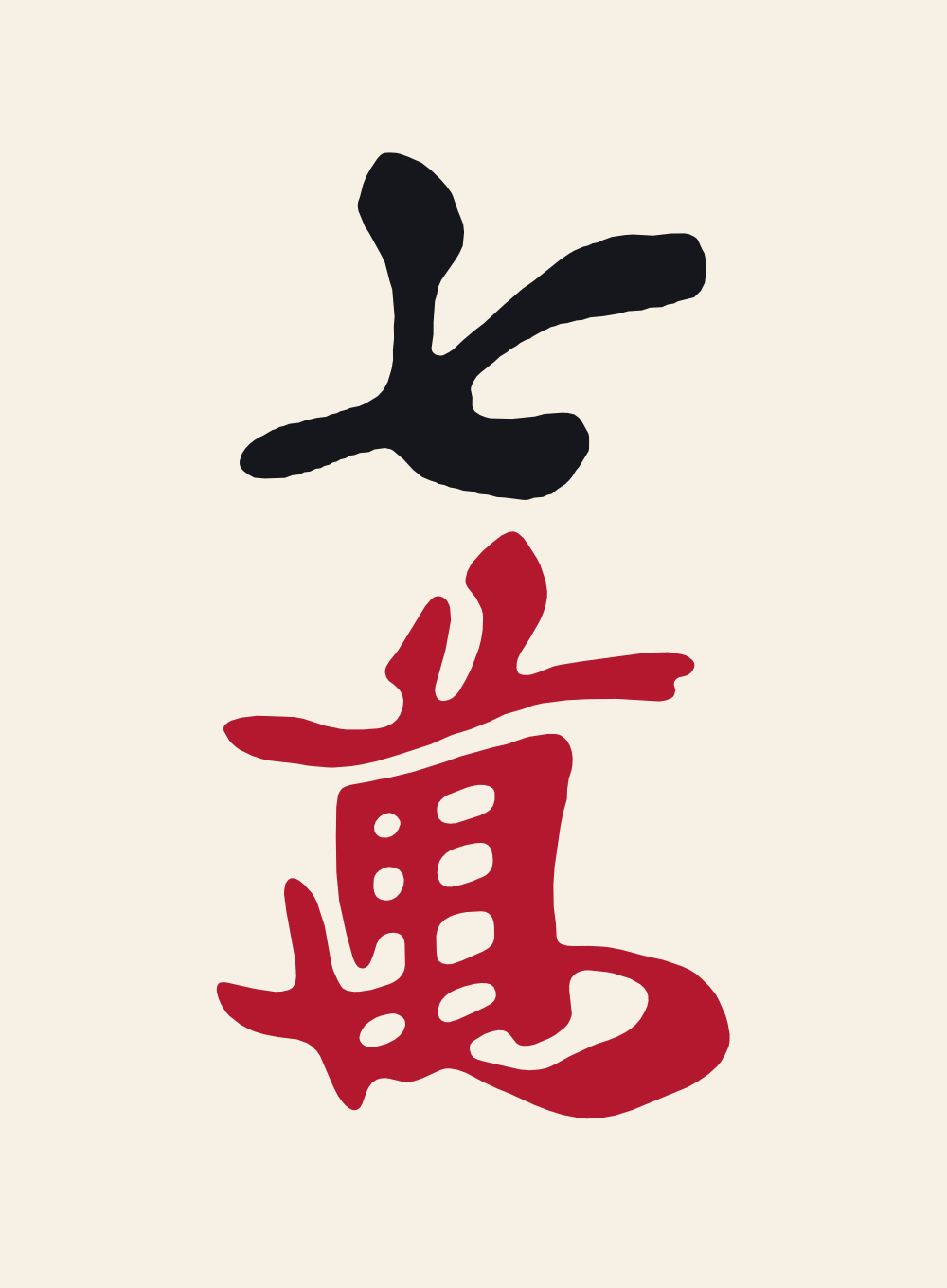
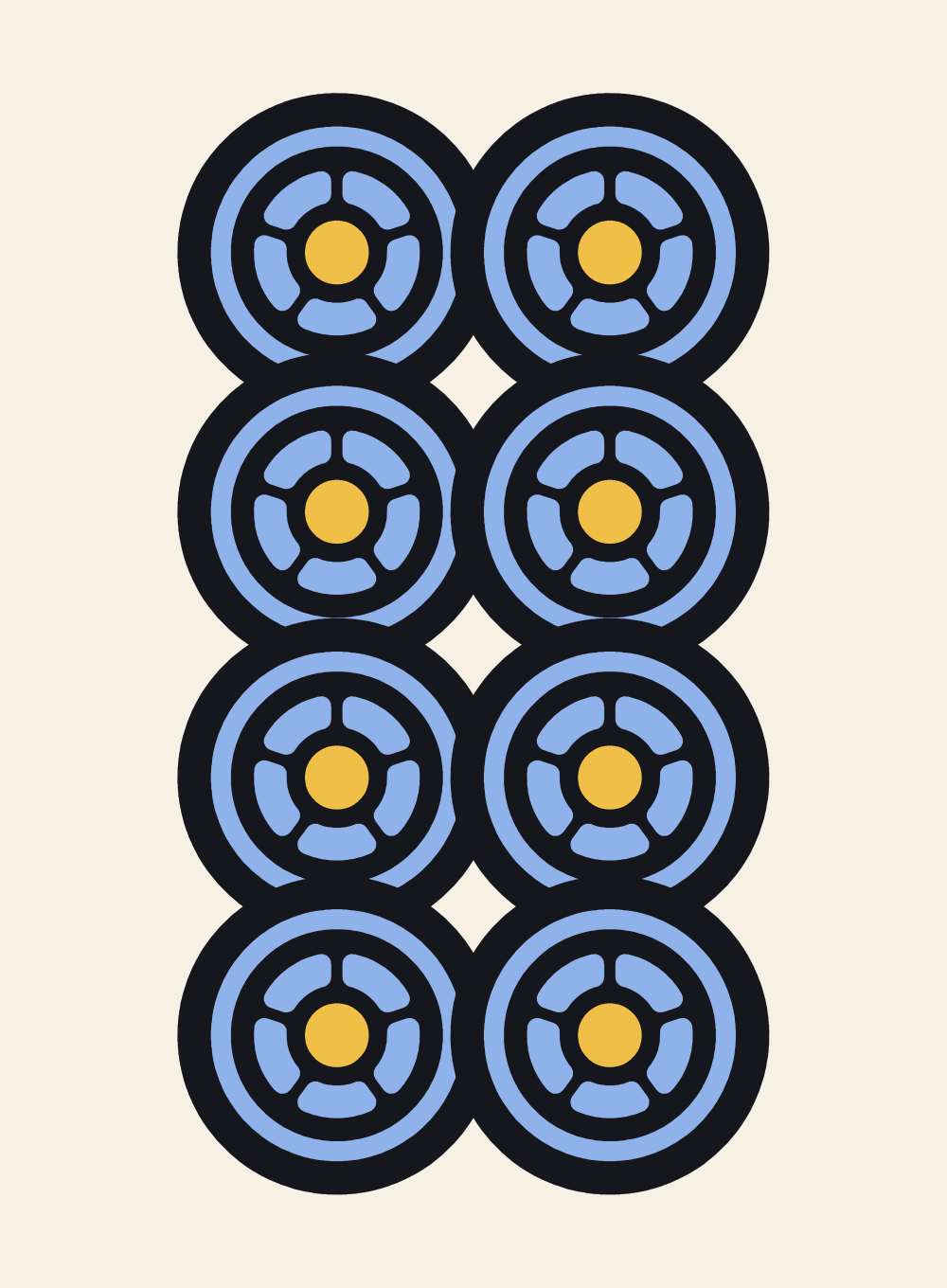
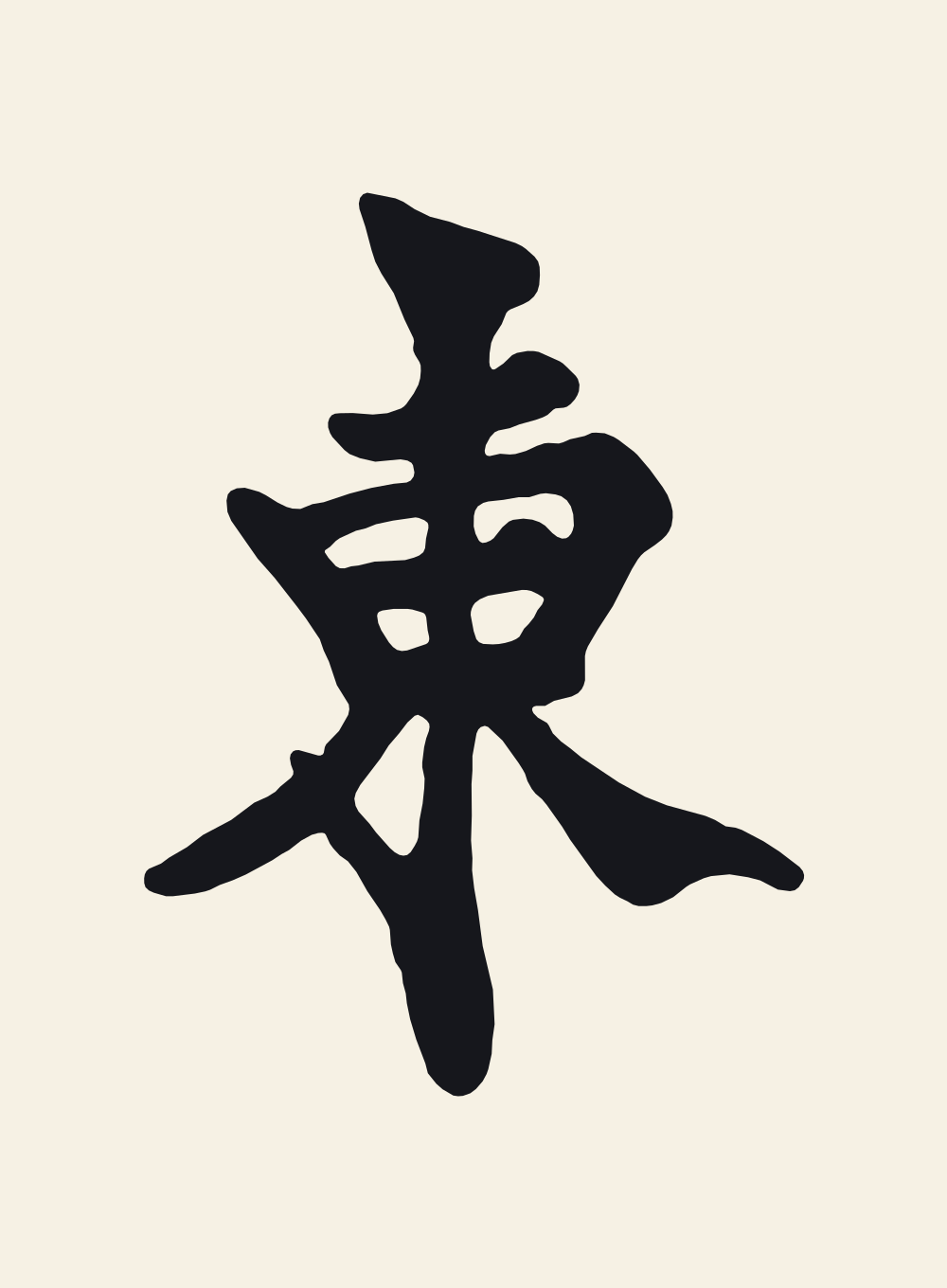
 won by ron on the 3s, closed, as a non-dealer with riichi.
- Base 20 + closed ron 10 = 30
- Closed triplet of 8p (a simple): +4 → 34
- Pair of East: East is the round wind, so +2 → 36
- 3s finished a two-sided 4-5 wait: +0
36 rounds up to 40 fu. With riichi as its only yaku that is 1 han 40 fu: 1,300 points. One dora makes it 2,600.
Points tables
Below the limits, points are fu × 2han+2 (the "base"), times 4 for a non-dealer ron or 6 for a dealer ron, rounded up to the next 100. On tsumo the base is split: a non-dealer win costs each non-dealer 1× and the dealer 2×; a dealer win costs everyone 2×. Amber cells have reached mangan.
Non-dealer
| Non-dealer ron | 1 han | 2 han | 3 han | 4 han |
|---|---|---|---|---|
| 20 fu | — | — | — | — |
| 25 fu | — | 1,600 | 3,200 | 6,400 |
| 30 fu | 1,000 | 2,000 | 3,900 | 7,700 |
| 40 fu | 1,300 | 2,600 | 5,200 | 8,000 |
| 50 fu | 1,600 | 3,200 | 6,400 | 8,000 |
| 60 fu | 2,000 | 3,900 | 7,700 | 8,000 |
| 70 fu | 2,300 | 4,500 | 8,000 | 8,000 |
| 80 fu | 2,600 | 5,200 | 8,000 | 8,000 |
| 90 fu | 2,900 | 5,800 | 8,000 | 8,000 |
| 100 fu | 3,200 | 6,400 | 8,000 | 8,000 |
| 110 fu | 3,600 | 7,100 | 8,000 | 8,000 |
| Non-dealer tsumo | 1 han | 2 han | 3 han | 4 han |
|---|---|---|---|---|
| 20 fu | — | 400 / 700 | 700 / 1,300 | 1,300 / 2,600 |
| 25 fu | — | 400 / 800 | 800 / 1,600 | 1,600 / 3,200 |
| 30 fu | 300 / 500 | 500 / 1,000 | 1,000 / 2,000 | 2,000 / 3,900 |
| 40 fu | 400 / 700 | 700 / 1,300 | 1,300 / 2,600 | 2,000 / 4,000 |
| 50 fu | 400 / 800 | 800 / 1,600 | 1,600 / 3,200 | 2,000 / 4,000 |
| 60 fu | 500 / 1,000 | 1,000 / 2,000 | 2,000 / 3,900 | 2,000 / 4,000 |
| 70 fu | 600 / 1,200 | 1,200 / 2,300 | 2,000 / 4,000 | 2,000 / 4,000 |
| 80 fu | 700 / 1,300 | 1,300 / 2,600 | 2,000 / 4,000 | 2,000 / 4,000 |
| 90 fu | 800 / 1,500 | 1,500 / 2,900 | 2,000 / 4,000 | 2,000 / 4,000 |
| 100 fu | 800 / 1,600 | 1,600 / 3,200 | 2,000 / 4,000 | 2,000 / 4,000 |
| 110 fu | 900 / 1,800 | 1,800 / 3,600 | 2,000 / 4,000 | 2,000 / 4,000 |
Tsumo cells read "from each non-dealer / from the dealer".
Dealer
| Dealer ron | 1 han | 2 han | 3 han | 4 han |
|---|---|---|---|---|
| 20 fu | — | — | — | — |
| 25 fu | — | 2,400 | 4,800 | 9,600 |
| 30 fu | 1,500 | 2,900 | 5,800 | 11,600 |
| 40 fu | 2,000 | 3,900 | 7,700 | 12,000 |
| 50 fu | 2,400 | 4,800 | 9,600 | 12,000 |
| 60 fu | 2,900 | 5,800 | 11,600 | 12,000 |
| 70 fu | 3,400 | 6,800 | 12,000 | 12,000 |
| 80 fu | 3,900 | 7,700 | 12,000 | 12,000 |
| 90 fu | 4,400 | 8,700 | 12,000 | 12,000 |
| 100 fu | 4,800 | 9,600 | 12,000 | 12,000 |
| 110 fu | 5,300 | 10,600 | 12,000 | 12,000 |
| Dealer tsumo | 1 han | 2 han | 3 han | 4 han |
|---|---|---|---|---|
| 20 fu | — | 700 all | 1,300 all | 2,600 all |
| 25 fu | — | 800 all | 1,600 all | 3,200 all |
| 30 fu | 500 all | 1,000 all | 2,000 all | 3,900 all |
| 40 fu | 700 all | 1,300 all | 2,600 all | 4,000 all |
| 50 fu | 800 all | 1,600 all | 3,200 all | 4,000 all |
| 60 fu | 1,000 all | 2,000 all | 3,900 all | 4,000 all |
| 70 fu | 1,200 all | 2,300 all | 4,000 all | 4,000 all |
| 80 fu | 1,300 all | 2,600 all | 4,000 all | 4,000 all |
| 90 fu | 1,500 all | 2,900 all | 4,000 all | 4,000 all |
| 100 fu | 1,600 all | 3,200 all | 4,000 all | 4,000 all |
| 110 fu | 1,800 all | 3,600 all | 4,000 all | 4,000 all |
Mahjong Sushi plays without kiriage mangan, as Mahjong Soul does: 4 han 30 fu is 7,700, not 8,000.
Limit hands
| Limit | Non-dealer ron | Non-dealer tsumo | Dealer ron | Dealer tsumo |
|---|---|---|---|---|
| Mangan5 han (or 4 han 40+ fu, 3 han 70+ fu) | 8,000 | 2,000 / 4,000 | 12,000 | 4,000 all |
| Haneman6–7 han | 12,000 | 3,000 / 6,000 | 18,000 | 6,000 all |
| Baiman8–10 han | 16,000 | 4,000 / 8,000 | 24,000 | 8,000 all |
| Sanbaiman11–12 han | 24,000 | 6,000 / 12,000 | 36,000 | 12,000 all |
| Yakuman13+ han, or a yakuman hand | 32,000 | 8,000 / 16,000 | 48,000 | 16,000 all |
Yakuman stack: two yakuman in one hand pay double. A few count as double yakuman on their own, such as kokushi musou on a 13-sided wait.
Honba, riichi sticks and the dealer
- Honba: each counter adds 300 to a ron (100 from each player on tsumo). Counters go up when the dealer keeps the seat or the hand is drawn.
- Riichi sticks: every 1,000-point riichi stick on the table goes to the next winner.
- Exhaustive draw: players in tenpai split 3,000 points from those who aren't.
- Dealer: wins 1.5× and keeps the deal after a win or a tenpai draw.
Final score and uma
Everyone starts at 25,000 and the target is 30,000. At the end of the game, each score becomes (points − 30,000) ÷ 1,000, plus uma of +15 / +5 / −5 / −15 by placement and a 20-point oka bonus for first.
Let the table count for you
Mahjong Sushi scores every hand for you and shows the breakdown on the result screen, yaku by yaku.
Play Mahjong Sushi